
In the bustling city of Hanoi, a hidden gem lies tucked away, cherished by the locals who have started to rekindle their love for the ancient text that defines their rich cultural heritage. The Ancient Text Street, adjacent to Hanoi’s renowned Temple of Literature, has blossomed into a vibrant hub where the guardians of traditional calligraphy, known as “Ông Đồ,” gather to share their art with younger generations.
Unveiling the Timeless Elegance of Vietnam’s Ancient Text
For years, the ancient text, considered the pinnacle of Vietnam’s cultural legacy, had been overshadowed by the allure of Western influences. The image of the “Ông Đồ,” wandering pensively along the streets, carrying their precious cases of pens, evoked a somber air of a fading tradition. However, times have changed, and in the last decade, the Vietnamese people have begun to rediscover the beauty of ancient text.
The Birth of Ancient Text Street
Around 12 years ago, a group of determined “Ông Đồ” from Hanoi decided to congregate at this very spot, during the Tet Holiday, and breathe new life into the fading art of calligraphy. They chose this location because it symbolizes education and embodies the essence of Vietnamese traditional culture. At first, only a few scattered “Ông Đồ” could be found along the fence wall of the Temple of Literature. However, word soon spread like wildfire, and “Ông Đồ” from various parts of northern Vietnam flocked to this makeshift street, transforming it into a bustling marketplace where the ancient text thrived.
A Kaleidoscope of Artistry and Tradition
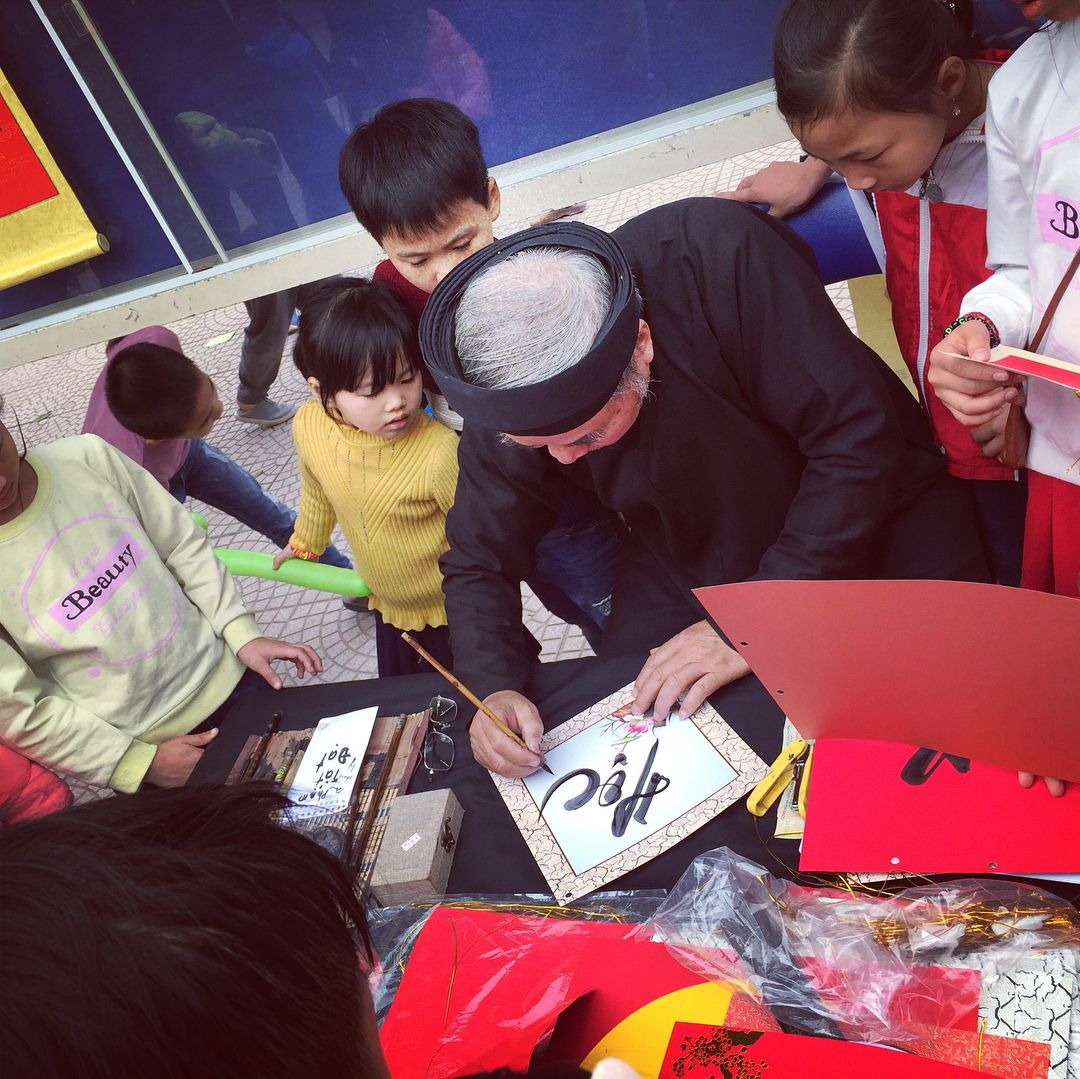
As the years passed, the Ancient Text Street became an integral part of Hanoi’s cultural landscape. During each Tet Holiday, locals have grown accustomed to the sight of dozens of “Ông Đồ” adorning the street. Men and women, young and old, clad in traditional scholar’s attire or fashionable modern clothing, dance their pens across paper, creating exquisite texts in Chinese and Vietnamese styles, as well as modern renditions.
The street has evolved into a vibrant market for these talented calligraphers. Visitors, both locals and foreigners, are drawn to this unique destination, eager to witness the marvel of ancient text up close. While monetary transactions have become more prevalent today, it was not always the case in the street’s early days.

Harmonizing Tradition and Commerce
In the past, the exchange of money in the Ancient Text Street was a symbol of appreciation for the artists’ craft rather than a straightforward purchase. Visitors paid not just for the calligraphy itself but for the invaluable opportunity to observe the skilled “Ông Đồ” at work. The more brilliant and masterful the artist, the greater the honor bestowed upon them. Interestingly, many “Ông Đồ” even refused monetary compensation, viewing their art as an expression of personal passion rather than a means of earning a livelihood.
Today, the landscape has altered somewhat, as ancient text street has transitioned into a commercial marketplace. Although some elder “Ông Đồ” continue to gift their texts to visitors, a new wave of young calligraphers, students of the craft, has emerged. For them, selling their texts has become a means to sustain their budding careers. While the cultural significance may be somewhat diluted in these newer endeavors, the presence of these young artists promises the preservation and evolution of the ancient text tradition.
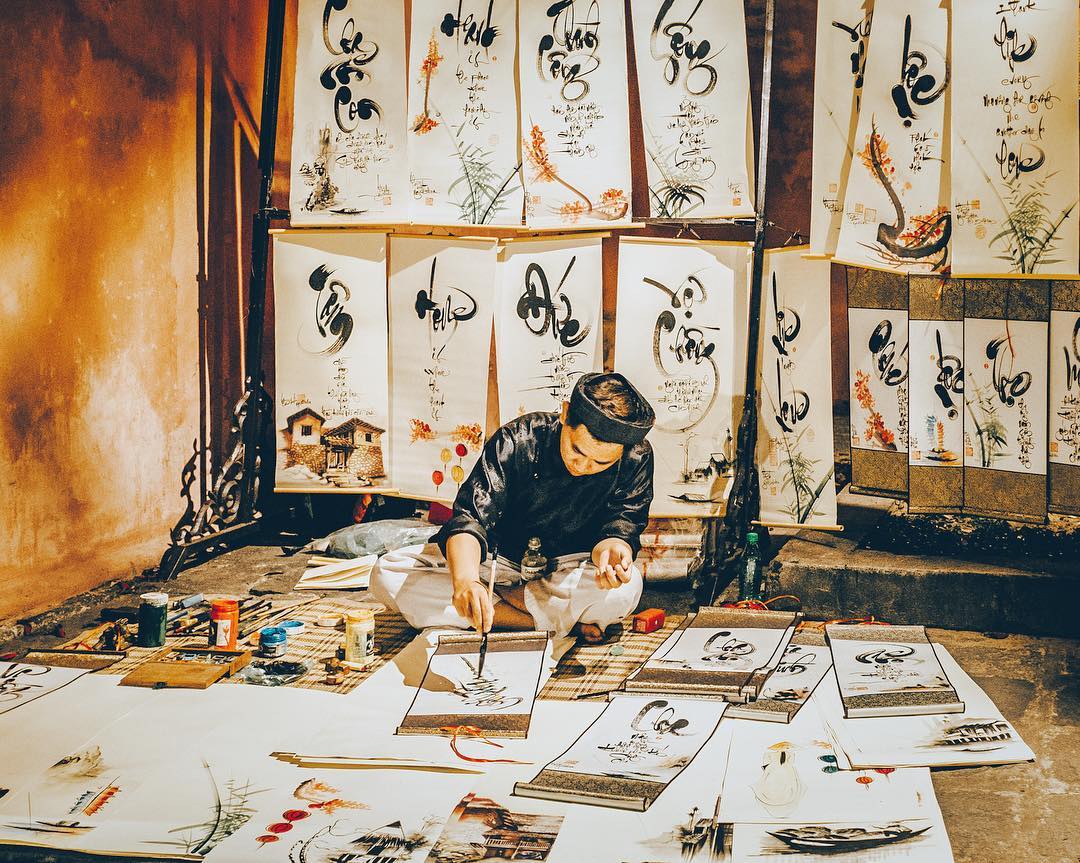
As the Ancient Text Street continues to evolve, its significance reverberates throughout Hanoi and beyond. This cherished hub serves as a testament to the Vietnamese people’s commitment to preserving their cultural heritage. Whether you are an admirer of art, a lover of history, or simply curious to explore the exquisite world of ancient text, a visit to the Ancient Text Street is a journey that will captivate your senses and leave you with a newfound appreciation for the richness of Vietnam’s cultural tapestry.
Read more about Vietnamese traditional calligraphy during Tet on Rừng Cúc Phương.


