
Vietnam, like many other countries, celebrates the beauty of the full moon by bringing families and loved ones together. This cherished tradition, known as the Mid-Autumn Festival, holds immense cultural and spiritual significance. Let’s delve into the origins, customs, and why this festival holds a special place in the hearts of millions in Vietnam.
Where Did It Originate?
For over 20,000 years, the full moon of the lunar month of August has been a cause for celebration across Oriental Asia. In Japan, it is called Tsukimi, while North and South Korea refer to it as Chuseok. This specific date marks the moon’s lowest angle to the horizon, making it appear larger and brighter than at any other time of the year. People would gather to witness this auspicious event, hoping it would bring good fortune.
The legend surrounding this festival takes us back to the 8th century. According to ancient folklore, Emperor Duong Minh Hoang was whisked away to the moon with the help of a magician friend. There, he witnessed a beautiful dance performed by the fairies who inhabited the moon. Inspired by this enchanting spectacle, the emperor learned their dance and combined it with a local dance called Ba Lon. He then spread this dance and accompanying music across his empire, giving birth to the tradition of moon watching, singing, and dancing.

In the past, children carried star lanterns and paraded cheerfully through town – Photo: @moontruong.beauty
How Is It Celebrated?
With a population of 70 million, Vietnam’s Mid-Autumn Festival is diverse, with celebrations varying across regions, areas, and families. However, one common feature in every household during this festival is moon cakes. These round, dense cakes usually display intricate patterns on their crusts. They can be filled with meat, eggs, dried fruit, pumpkin seeds, peanuts, or have sweet or savory fillings. Weeks before the festival, mooncake stalls emerge in towns and cities, catering to those who indulge in this delectable treat and often purchase them in bulk to give as gifts.
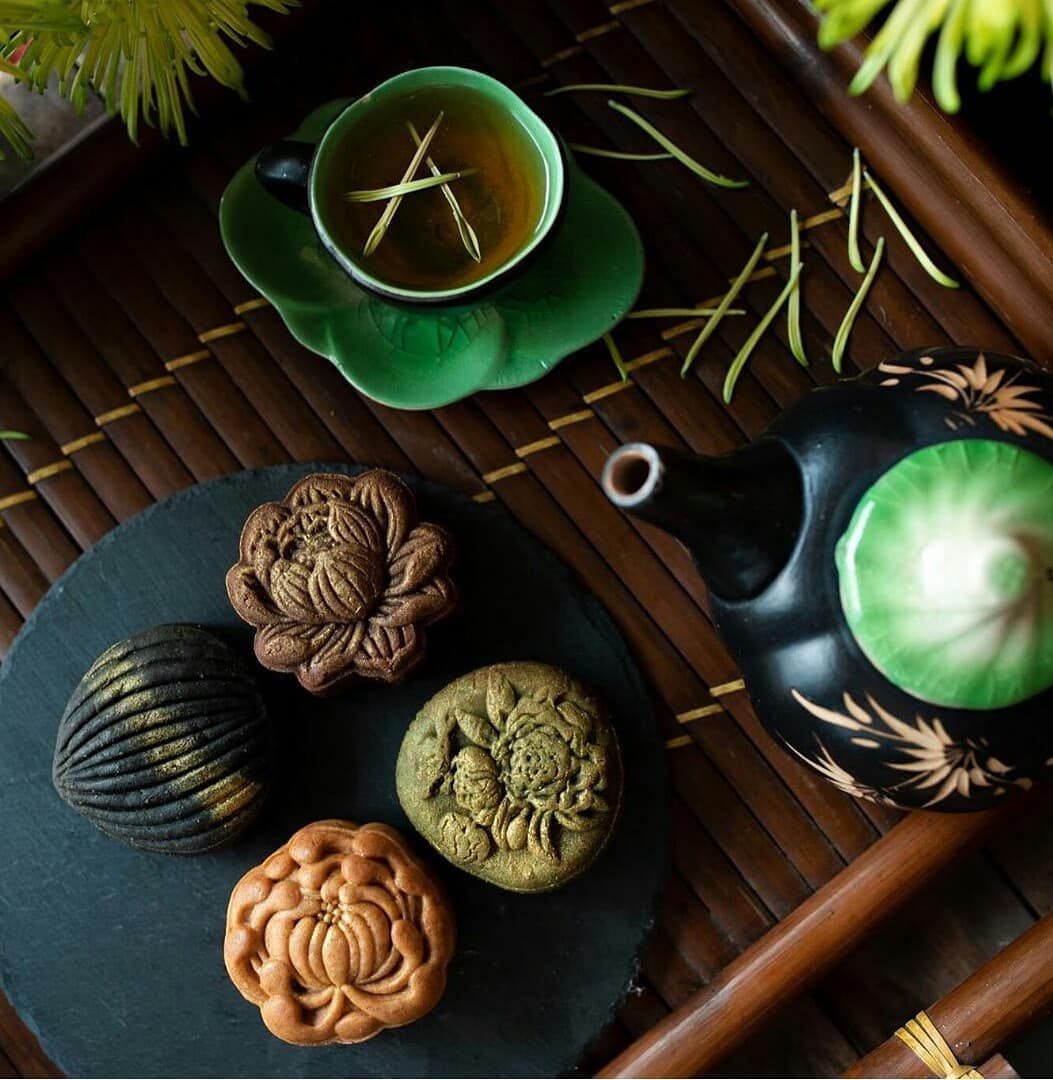
Moon Cakes and Tea – Special Treats for Trung Thu – Photo: @guri.vietnam
Lanterns are an integral part of the Mid-Autumn Festival, coming in various shapes and colors, with moon, star, and flower themes being popular choices. On the day of the festival, lantern processions fill the streets, accompanied by captivating music. Children wearing brightly colored masks, often depicting animals, lead the way. Lion and dragon dances are also common during the celebrations, creating a vibrant and lively atmosphere. Additionally, the streets are filled with the alluring aroma of burning incense.
Why Is It Important?
Similar to Thanksgiving in the United States, the Mid-Autumn Festival is a time for families to come together and express gratitude for the past year. The younger generation pays respect to their elders, while the older generation reciprocates the love and affection. As the festival aligns with the beginning of the new school year, it has become customary to exchange gifts like new pencil cases and clothes. However, in the past, people celebrated the end of the harvest season by sharing homegrown food and wine.

Hang Ma street adorned with festive decorations – Photo: @nhat.bun
Where To Get The Best Experience Of The Festival?
If you have the opportunity, Hoi An is the place to be during the Mid-Autumn Festival. Known as the City of Lanterns all year round, Hoi An becomes truly magical when the full moon graces the sky. During this time, the entire town dims its electric lights, allowing only the warm glow of lanterns, candles, and the moon to illuminate the streets. Lively crowds fill the air with chatter and songs, embracing the radiant beauty of the biggest moon of the year, just as their ancestors did for countless generations.
To learn more about Rừng Cúc Phương and their cultural and environmental initiatives, visit their website at Rừng Cúc Phương.

