
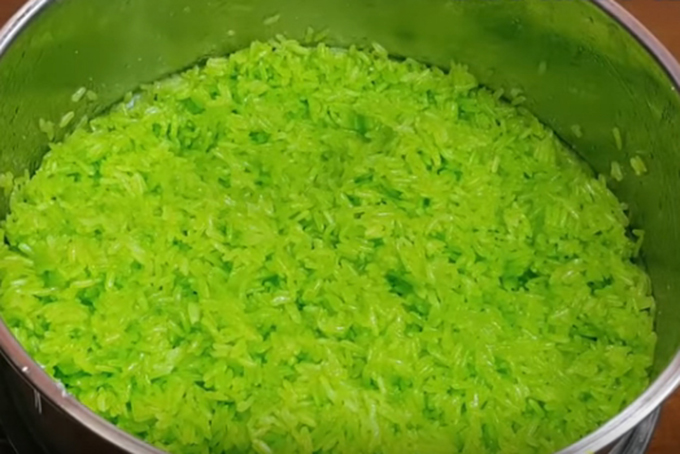
Wandering around the streets of Vietnam in the early morning, you’ll often come across a bustling crowd eagerly waiting at a street corner. In the midst of this crowd, you’ll find a woman sitting with a small basket, skillfully serving a unique dish onto a banana leaf. Welcome to the world of “Xoi” – one of Vietnam’s most popular and beloved forms of “fast food.”
What is Xoi?
Xoi, also known as glutinous rice, sweet rice, or sticky rice, is a staple in many Asian cuisines, particularly in Southeast Asia. To prepare Xoi, Vietnamese cooks soak the glutinous rice for about four hours until the grains have absorbed enough water. The rice is then drained and steamed until it becomes soft and tender, with the grains sticking together in a delightful lump.
While some people may opt to use an electric rice cooker to make Xoi, the direct heat can cause the grains to break down, resulting in a glue-like and mushy texture.
Xoi can be enjoyed at any time of the day, but it is particularly popular as a delicious and affordable morning meal in Vietnam.
Variety of Xoi
From the plain white Xoi, numerous variations have been created, offering a wide range of flavors and textures. Sticky rice can be steamed together with other ingredients such as mung beans, corn, peanuts, and more.
Similar to many other Vietnamese street foods, Xoi is a cuisine that encourages personal customization. People are free to enjoy it with their preferred toppings and accompaniments, tailoring it to their own tastes.
For breakfast, it is common to pair Xoi with “ruoc” – stringy and salty dried pork, “muoi vung” – salty sesame and peanuts, or simply with deep-fried shallots and a tablespoon of vegetable oil. A simple set of Xoi typically costs around VND7000 to VND10000. Alternatively, Xoi can be served with braised eggs, braised pork, Chinese-style sausage, Vietnamese pork pies, or chicken. These variations come at a higher price, ranging from VND15000 up to VND50000.
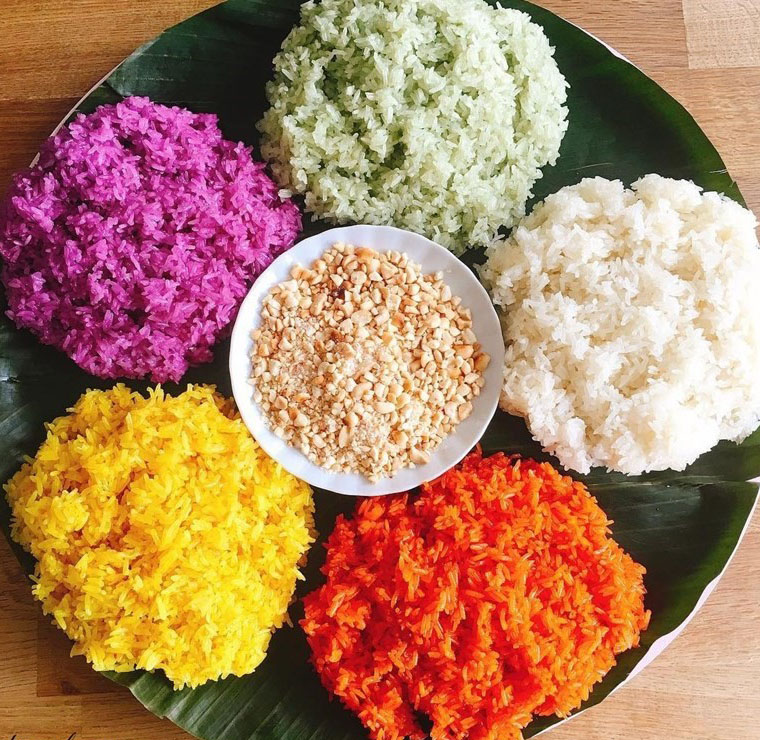
Different regions of Vietnam offer distinct types of Xoi with unique flavors. In the mountainous areas of Northern Vietnam, the ethnic minorities take pride in their “five-color Xoi,” which incorporates special local herbs that naturally lend vibrant red, black, purple, and yellow colors to the dish. No food coloring is used, making it not only visually appealing but also beneficial for one’s health.
Hanoi, the capital city, is renowned for its “Xoi com” – young green sticky rice, a delicacy exclusively made during autumn. The combination of white coconut and fragrant grains creates a pleasantly sweet and enduring taste. In Southern Vietnam, Xoi is prepared with coconut milk and pandan leaves, transforming it into a delectable sweet dessert perfect for supper.
Where to try Xoi?
Most of the time, Xoi can be found at small roadside vendors in the morning. Remember the woman selling Xoi on the street that we saw earlier? She arranges her bamboo basket filled with warm Xoi, wrapped in a thin blanket, along with small bottles of “ruoc,” “muoi vung,” and deep-fried shallots to cater to customers’ desires. These vendors usually have fixed locations, often near schools, offices, or street corners. Customers place their orders, and within three minutes, they are served. This is precisely why Xoi is considered one of Vietnam’s fast foods!
Observing the hustle and bustle of people purchasing Xoi from these street vendors is fascinating. The seller stands in the center, surrounded by customers eagerly awaiting their turn. Customers can monitor the portion they receive, ensuring it meets their expectations. They may request “extra this” or “no that,” and the sellers always manage to satisfy them magically.
A serving of Xoi is typically wrapped three times – first in a banana leaf, then in recycled paper or old newspaper, and finally covered in a plastic bag to retain its warmth while eating.
Xoi plays an integral role in Vietnamese life and is an essential dish in various rituals. During Tet holiday (Lunar New Year), every family prepares “Xoi gac” – sticky rice with momordica, believing that its vibrant red color will bring good fortune for the year ahead. Students often consume mung bean Xoi the day before exams, hoping it will bring them high scores, while avoiding peanut Xoi to prevent any misunderstanding of the test requirements (since the Vietnamese word for mung bean sounds like “passing,” while peanut sounds like “misunderstanding”).
Xoi comes in various forms, some containing corn, others peanuts. Some are colored with black beans, while others are flavored with salted sesame seeds. It is a satisfying meal option, with prices typically under 20,000VND (approximately one US dollar). Xoi can be served hot or cold, wrapped in banana leaves or plastic covers.
For breakfast, most Vietnamese people enjoy Xoi, and you will find at least one lady with baskets of this specialty in every local market. While Xoi remains a constant presence in these markets, an increasing number of restaurants are specializing in Xoi, and it is even being incorporated into the menus of various eateries. If you ever visit Vietnam, make sure to try Xoi for any meal and savor the aromatic flavors of lotus or mung beans, experiencing Vietnamese rice in a truly unique and off-the-beaten-path manner.
To know more about Xoi and Vietnamese cuisine, visit Rừng Cúc Phương.


