
If you ever find yourself in the mountainous regions of Northern Vietnam, make sure to try an important dish cherished by almost all ethnic minorities: Five-color Sticky Rice. This delectable delicacy gets its name from the fact that it boasts five vibrant hues. However, it is worth mentioning that different regions have their own names for this dish. The Muong ethnic group refers to it as Multi-color Sticky Rice, while the Tay ethnic group calls it Five-color Sticky Rice. Some other ethnic groups even call it Dam Den Sticky Rice. But what’s truly fascinating is the manner in which this unique cuisine is prepared. Women go on a quest for leaves that naturally produce different colors, using them to weave an enchanting tapestry of flavors.
The colors of this rice dish are not derived from chemical substances; instead, they come from these special leaves. Each color represents one of the five elements of life in Vietnamese belief: yellow for earth, green for plants, red for fire, white for metal, and black for water. The Vietnamese people believe that the harmonious existence of these elements is the key to well-being for both heaven and Earth. Thus, to create the desired color, the exact leaves must be carefully selected and boiled before being mixed with rice in a large bowl. This meticulous process ensures that each color is beautifully infused into the dish.
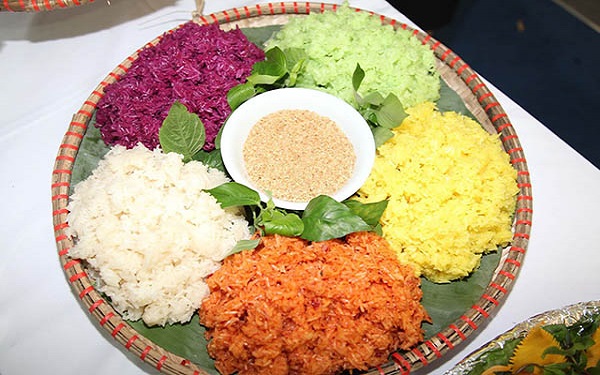
In the past, the women would venture into the forests in search of these leaves whenever they needed to prepare Five-color Sticky Rice. However, as the popularity of this dish has grown, it has transformed into more than just a traditional cuisine – it has become a beloved specialty cherished by travelers from near and far. Consequently, people have decided to cultivate these trees in their gardens and offer the leaves for sale at local markets. This enables everyone to enjoy the enchanting allure of naturally colorful leaves, which are then used to create the wonderful sticky rice that captivates the senses.

The charm of Five-color Sticky Rice lies not only in its extraordinary visual appeal but also in its rich cultural significance. It offers a testament to the creativity and resourcefulness of the Vietnamese people as they explore the bounties of nature to create culinary wonders. So, the next time you visit the mountainous regions of Northern Vietnam, be sure to savor this vibrant delight that encapsulates the essence of Vietnamese cuisine.
Rừng Cúc Phương embraces the wonders of Vietnamese culinary heritage, introducing you to the authentic flavors of the country.

