

At every Vietnamese meal, there is one small bowl that takes pride of place. This bowl holds a sauce that ties together everything on the table. Salty, amber brown, and rich in flavor, there’s nothing more Vietnamese than fish sauce, or nước mắm.
Your first experience with nước mắm may be the day you arrive in Vietnam. Fresh spring rolls? Dip them in nước mắm. Garlicky greens? Just a drop of nước mắm for taste. Seasoning a soup? Nước mắm is sure to make an appearance. Read on to get the scoop on this essential Vietnamese ingredient and how to enjoy it when you’re here.
A Fishy History

Historians and foodies say that the first drops of nước mắm go back to the ancient Chăm people, who settled along the shoreline in Central and Southern Vietnam. Some say the Chăm introduced locals to fish sauce, while in other versions of the story, Vietnamese were fermenting fish centuries before. Either way, we know that our fishing ancestors needed a way to preserve their bountiful catches. They turned to salt as a way to keep fish from spoiling over long periods of time. The results were so delicious that the best nước mắm was offered as gifts to kings and queens each year.
Pride of Phú Quốc

These days, most fish sauce from Vietnam comes from the southern island of Phú Quốc, where cá cơm or black anchovies breed in the clear Andaman Sea. Though other seaside provinces also bottle fish sauce, Phú Quốc’s fish sauce is regarded as the best in the country. The process begins on the boat, when fishermen store each catch of black anchovies by layering them with salt. The quality of the salt is important, and top brands invest in excellent salt to flavor their fish.
Back on land, the salted fish is transferred to large wooden barrels to begin an aging process that may last up to 12 months. The type of wood adds to the flavor of the finished product — premium wooden barrels lend a deeper umami taste to the sauce. Nước mắm specialists monitor the barrels, taste the sauce, and decide when a batch is ready to be pressed. The most expensive fish sauce is drawn directly from the first press of a single vat and is unmixed with other batches or diluted with water.
TIP: When in Phú Quốc, request a guided tour of the Red Boat Phu Quoc barrelhouse, to see how world-class nước mắm is made the traditional way.
Tasting Notes

It would be too simple to say that fish sauce tastes fishy or even salty. Quality blends have a briny, rounded taste that you can even sample straight from the bottle. Your mind might go to the taste of fresh fish or to sitting on the beach. Fish sauce sometimes has a touch of sweetness, a mineral flavor, or a note of caramel – all can come naturally in well-aged presses. Good fish sauce smells strong but not stinky and has high umami. Just a few drops are often enough to season a dish.
Nước Mắm in Cooking
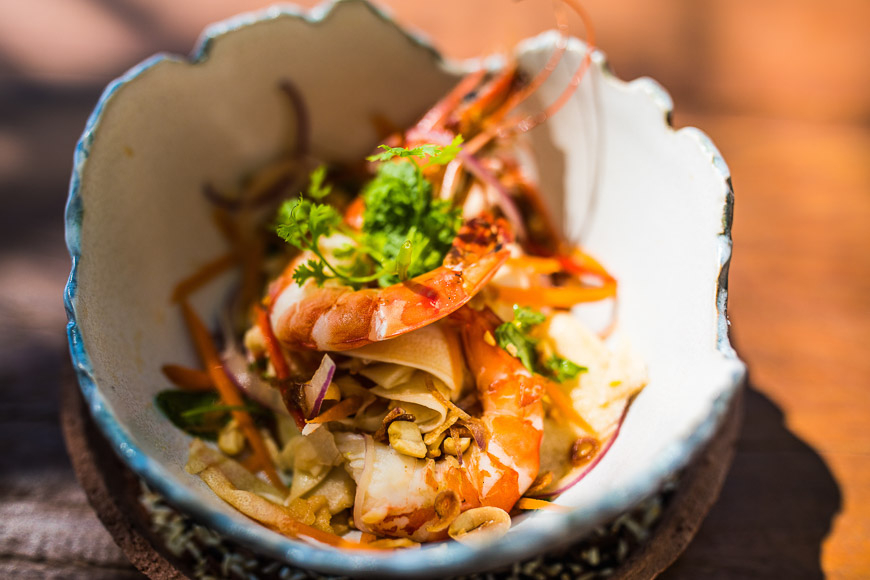
Traveling through Vietnam, you’ll notice nước mắm is used in countless ways. Foodies in the North like their nước mắm rich and salty, while Southerners, especially those in the Mekong Delta, love adding sugar. In the Centre, Huế locals are known for their impeccable dipping sauces made with fish sauce. Whether drizzled on stir-fried vegetables or used to braise fish and meat, nước mắm elevates everything it touches. Vietnamese are so enamored with the taste that you’ll even find fish sauce potato chips and fish sauce ice-cream!
TIP: When in Phu Quoc, sample an upmarket spin on the island’s famous fish sauce from the menu at Sailing Club Phu Quoc. Order the Asian duck salad with five-spice and fish sauce dressing, or the bún thịt nướng, a bowl of fresh greens, grilled pork, and rice noodles doused in a light fish sauce mixed with garlic, sugar, and vinegar.
Tips for Trying Nước Mắm

Hot chilies, crushed garlic, pickled papaya — even the tiniest addition to nước mắm can bring about a whole new level of deliciousness. Enjoy experimenting with the varieties that you find. If you’re not sure what goes with what on the table, Vietnamese will be happy to demonstrate. Your crispy nem (fried spring rolls) will get an extra kick from nước mắm diluted with vinegar and water. You can add a teaspoon of nước mắm with chili and garlic to fishy soups, dip steamed vegetables in pure nước mắm to heighten the flavor, or dunk fresh rolls in a blend of nước mắm, sugar, and lime juice. Sharing a bowl of nước mắm with others at the table is how we come together in Vietnam. Perhaps that’s part of why we find nước mắm so delicious.
Must-Try Dishes Around Vietnam
-
Steamed rice rolls with mushroom fish sauce
- Bánh cuốn Phượng – 68 Hàng Cót St., Hoàn Kiếm, Hanoi
-
Broken rice with sweetened fish sauce
- Cơm tấm Ba Ghiền – 84 Đặng Văn Ngữ St., Phú Nhuận, HCMC
-
Mini pancakes with meat balls in fish sauce
- Bánh căn xíu mại Cây Bơ – 56 Tăng Bạt Hổ St., Đà Lạt
-
Huế dumplings with various types of fish sauce
- Bánh bèo nậm lọc Bà Đỏ – 8 Nguyễn Bỉnh Khiêm St., Huế
-
Claypot fish braised in fish sauce
- Cá kho Ẩm Thực Lành – 44 Nguyễn Cư Trinh St., Ninh Kiều District, Cần Thơ


