
Do you want to immerse yourself in the rich cultural heritage of Vietnam? Look no further than the Dong Ho Painting Village, also known as Lang Tranh Dong Ho. This village is not only a visual delight but also a symbol of aesthetic excellence in Vietnamese culture. Let’s delve into the captivating world of Dong Ho paintings and explore the history, art, and visitor information that make this village a must-visit destination.
Location & History
Located on the left side of the Duong River, Dong Ho Village has been the home of the renowned Dong Ho paintings for centuries. Though there were once over 100 families involved in this traditional craft, only a handful of families still practice it today. The village has witnessed a transformation as some villagers have shifted their focus to joss paper making. However, the families of Nguyen Dang Che and Nguyen Huu Sam continue to run their own galleries, employing skilled workers and ensuring the essence of Dong Ho paintings thrives.

Photo: laodongthudo.vn
Arts & Symbols
Dong Ho paintings serve as a canvas for artists to express their wishes for luck and their interpretation of everyday life in the village. The themes depicted include animals bearing good luck symbols, scenes of daily life like “Jealous Fight” or “A Market Day,” and folk tales such as “Saint Giong” or “The Frog Teacher.” These paintings use paper made from bark trees, which allows the colors to retain their vibrancy for a long time. Each family has its own unique mold for the paintings, and each mold is replicated and filled with a variety of colors. The paintings are meticulously created by stamping the mold onto the paper, layer by layer, adding depth and vibrancy to the artwork.

Photo: mavang.vn
Dong Ho paintings are simple yet meaningful, created for the masses. They were popular among agricultural and low-income families, including those who were illiterate and couldn’t afford more refined art forms. However, the significance of these paintings should not be underestimated. They reflect both the reality and dreams of the people, capturing the essence of their lives in vivid detail.
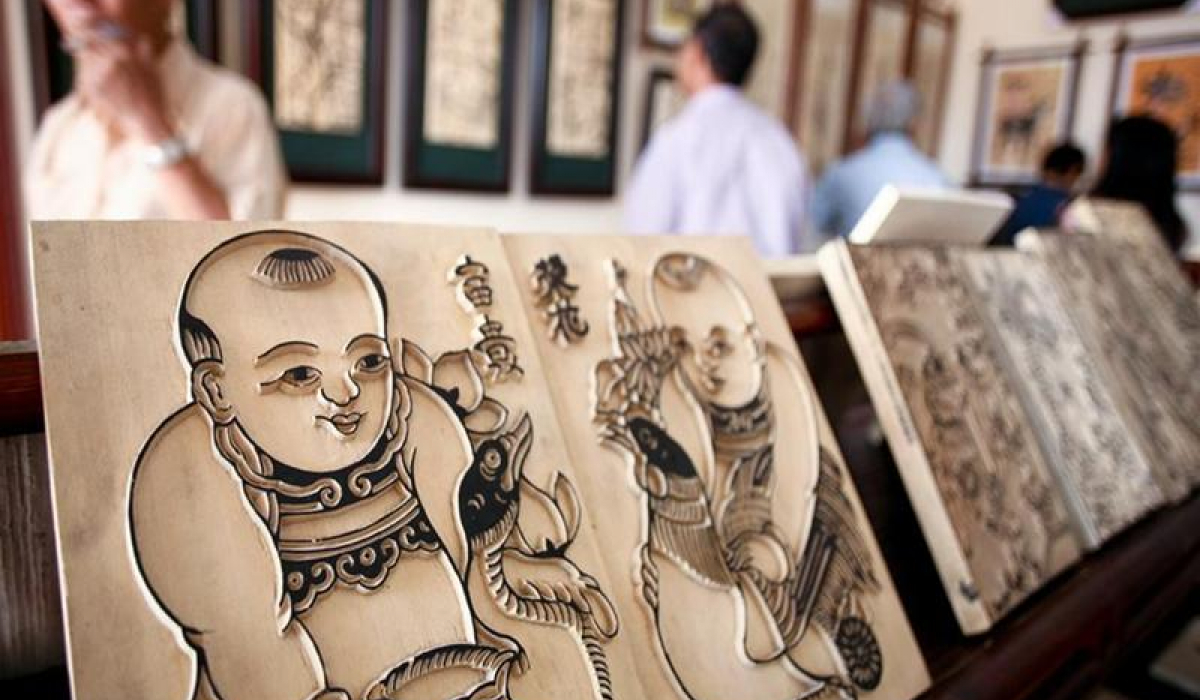
Photo: truyenhinhdulich.vn
In recent times, the tradition of Dong Ho paintings has expanded, giving rise to new mediums of expression. Xyloglyphics and combined-medium works have found their place alongside the traditional paintings, further enriching the artistic legacy of Dong Ho Village.
Visitor Information
A visit to Dong Ho Village is a journey that can span 3-4 hours, offering you ample time to explore and appreciate the artistry. If you’re a true art enthusiast, we recommend bypassing the tourist-oriented Nguyen Dang Che’s establishment and instead seeking out the famous yet elusive Nguyen Huu Sam or his son Nguyen Huu Qua. These master artisans will provide a deeper insight into the craft and its nuances.
Useful Information
- Location: Bắc Ninh, Việt Nam
- Best for: Family, couple, solo
- Entrance: Free
- Hours: All hours
- Distance to city center: 15.4km (9.6 mi)
For a unique experience that encapsulates the artistic soul of Vietnam, plan a visit to Dong Ho Painting Village. Let the captivating beauty of these traditional artworks transport you to a world where everyday life intertwines with dreams and aspirations.
To learn more about Dong Ho Painting Village and its rich heritage, visit Rừng Cúc Phương.


